
AI & Operations Partner
AI and Operations Guidance Grounded in Real Operating Discipline.
Total Control Consulting is an AI and operations partner for owner-led businesses. We help leaders decide where AI belongs, get the business ready to carry it, and put it to work without giving up judgment or control.
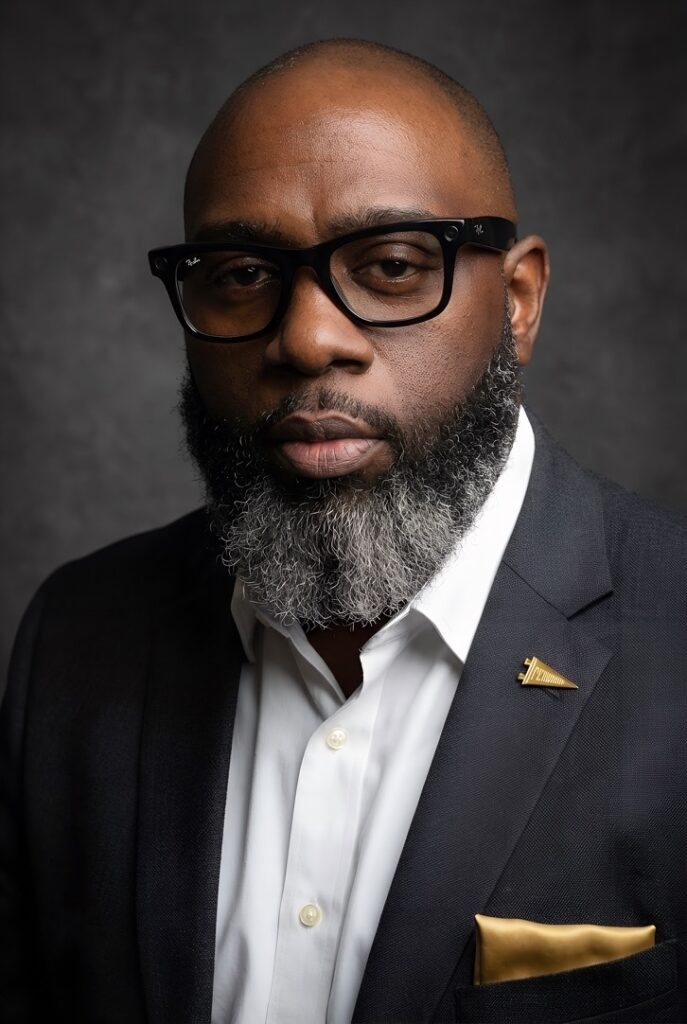
Founder Shenard Byrd brings more than two decades of banking risk and strategy leadership together with modern AI fluency for owner- and executive-led organizations seeking practical, disciplined progress.
Background
Executive Experience
For more than twenty years, Shenard worked across banking, risk, and strategy roles where capital discipline, operational governance, and responsible decision-making mattered.
This experience shaped a governance-first mindset that now supports established organizations operating in an AI-enabled environment.
That background informs TCC's governance-first approach to AI and operations: clarify the decision, define ownership and controls, test the work, and keep accountable human judgment where it matters.
Purpose
Why Governance Matters Now
Founders today do not lack access to tools, automation, or information. They face complexity, decision fatigue, and hidden exposure created by rapid growth and AI expansion.
The role of a governance-driven operating partner is not to add noise. It is to install structure, restore clarity, and reduce fragility.
Philosophy
Governance-Driven Growth
Growth without governance creates instability.
Governance without growth creates stagnation.
Disciplined structure aligns ambition with sustainability.
Total Control Consulting exists to ensure growth remains controlled, intelligent, and durable.
Discernment Before Deployment
Start With the AI Decision in Front of You.
The AI Verdict gives leaders an independent verdict on whether they, their people, and their business are ready for AI, what to fix first, and who owns what.
Organizational Models
Governance Across Organizational Models
What changes is funding structure.
Governance discipline applies equally to for-profit enterprises, nonprofit organizations, and faith-based institutions. The principles of capital stewardship, operational clarity, internal controls, and structural maturity do not change based on tax status.
Nonprofit and faith-based organizations operate within unique financial and oversight realities, including:
- Restricted and unrestricted funding
- Grant compliance and reporting requirements
- Board governance accountability
- Donor stewardship expectations
- Funding cycles and capital volatility
The 4C Governance Framework integrates these realities without compromising mission integrity. Governance strengthens stewardship. It does not dilute purpose.
Read: Governance for Faith-Based and Nonprofit Organizations →Capabilities
Core Expertise
Operational Governance
Designing and installing governance structures that bring order, accountability, and scalability to founder-led operations.
Risk Discipline and Internal Controls
Establishing oversight frameworks that identify exposure early and protect the business from preventable failures.
AI and Automation Oversight
Structured governance for adopting AI and automation without introducing unmanaged operational risk.
Financial Resilience and Capital Discipline
Aligning financial resources with strategic priorities through structured allocation and disciplined oversight.
Founder Capacity Realignment
Reducing founder and leadership dependency by redistributing operational load into repeatable, governed systems.
Scalable Process Architecture
Building repeatable operational systems that support growth without increasing fragility.
AI Governance in Practice
In practice, this means treating AI and automation like any other source of operational risk. We audit how tools are actually being used, consolidate sprawl into an intentional stack, and install governance checkpoints so leaders can move fast without compounding hidden exposure.
- Auditing existing AI and automation usage across tools, teams, and workflows
- Designing practical governance policies for AI use in client delivery and internal operations
- Embedding AI checkpoints into the 4C Governance Framework, especially around Capabilities and Capacity
Working Approach
Clear Decisions. Bounded Implementation. Human Accountability.
Decide First
Clarify the business decision, readiness, value, and human boundary before selecting technology.
Define the Boundary
Name the owner, approved inputs and outputs, review, escalation, fallback, and maintenance requirements.
Expand Carefully
Measure what works and broaden use only when the operation and accountable leaders are ready.
This work is not about adding layers of management. It is about removing fragility and building operational strength so founders can grow with confidence.